
THE RIDESHARE
APOCALYPSE
Why Driving Is Becoming a Trap, and why every rideshare driver has a closing window to turn today's fares into tomorrow's skills.
MetaJournal Educational Group · Published September 13, 2026· 42 reads
The income window is already closing
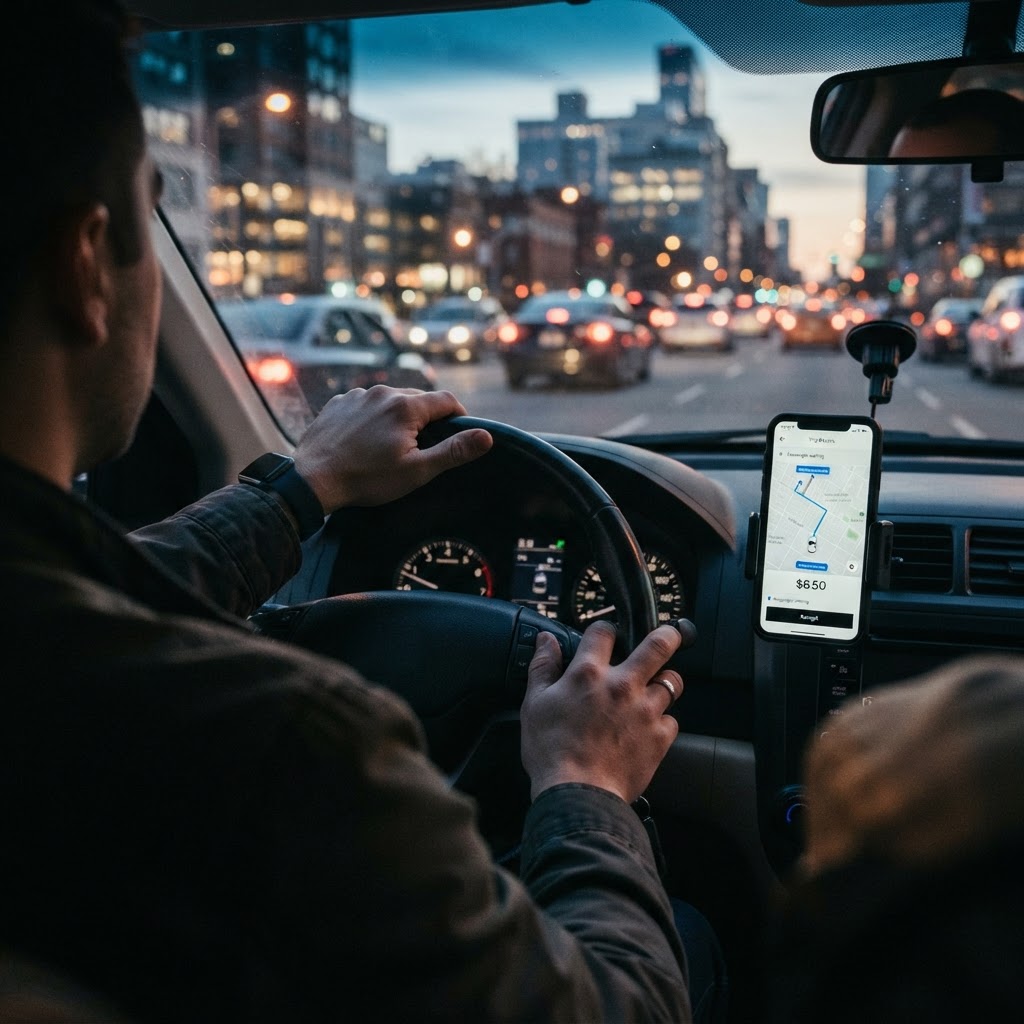
Drivers feel it before any analyst reports it: the same hours produce less money. Platform algorithms have quietly shifted from paying per mile and minute to paying per predicted willingness to accept. Two drivers on the same street, at the same minute, are now offered different money for the same ride.
Meanwhile the companies themselves are shrinking. Uber cut roughly 3,300 corporate roles, about 10% of its workforce, while committing $10 billion to robotaxi partnerships. Lyft cut around 1,200 roles, close to 30% of its corporate staff. When a platform trims its own offices to fund driverless fleets, the message to drivers is not subtle: you are the cost line the technology is designed to remove.
Your fares are not going to collapse overnight, they are going to grind down. That grind is the most dangerous part, because it feels survivable right up until the month it isn't. Treat every good week from here as funding for your next skill, not just this month's bills.
Who is actually coming for the fare
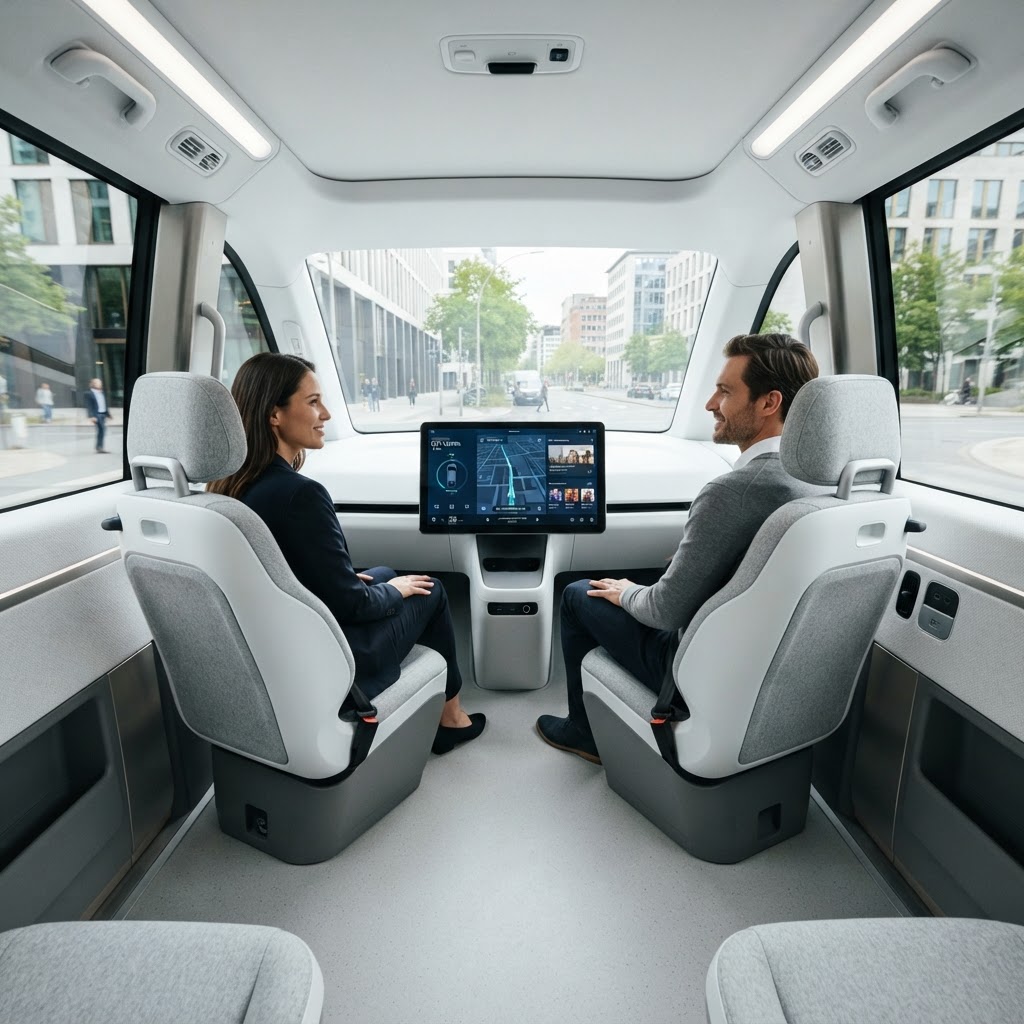
This is not one company's science project. It is a funded, licensed, revenue-generating industry operating on public American roads today, with each player attacking a different slice of the trips that make up a driver's week.
1,000,000
Unsupervised Cybercab Miles
That number doubled from 380,000 miles in just six weeks, announced at Tesla's Austin Cybercab event in September 2026 by VP of AI Ashok Elluswamy. The learning curve is no longer linear, and it is not waiting for drivers to be ready.
The US Autonomous Landscape
8 players · Sept 2026Tesla Cybercab
Tesla
Purpose-built 2-seat robotaxi, no steering wheel
1,000,000
unsupervised autonomous miles (Sept 2026)
Production targeted for 2026 at under $30,000 per unit with a ~20¢/mile operating cost. 45 Cybercabs already registered in Austin.
Waymo
Alphabet
Retrofitted SUVs / sedans, fully driverless
500K+
paid weekly rides across 14 cities
4,000+ vehicles, a 200M+ autonomous mile lead, ~$126B valuation and roughly 25% of San Francisco rideshare share. Targeting 1M weekly rides by end of 2026 and 20+ cities.
Zoox
Amazon
Purpose-built shuttle, no steering wheel
Aug 2026
first commercial paid robotaxi service (Las Vegas)
Federal exemption to build up to 2,500 vehicles per year, with Las Vegas airport service expansion underway.
Aurora Innovation
Aurora (public)
Class 8 driverless trucks
$1.2B
cash reserves funding driverless freight
First commercial driverless trucking on the Dallas–Houston corridor since May 2025, with Uber Freight, FedEx and Schneider partnerships.
May Mobility
Toyota-backed
Autonomous shuttles / microtransit
US cities
public shuttle and paratransit routes
Replacing short municipal and campus trips, exactly the low-mileage local fares that pad a driver's day.
Mobileye
Intel spinoff
ADAS + AV driving stack supplier
OEM scale
self-driving tech licensed to automakers
Arms every carmaker with autonomy, meaning the driverless fleet is not limited to a few tech giants.
Uber
Uber Technologies
Platform + AV partnerships
$10B
committed to robotaxi partnerships
Cut roughly 3,300 corporate jobs (10%) while funding the driverless network that will eventually compete with its own drivers.
Lyft
Lyft Inc.
Platform + AV partnerships
~30%
corporate workforce cut (1,200 roles)
Leaning on AV partners to survive on thinner margins, with driver pay the first line item under pressure.
US-operating players shown. Chinese operators (Baidu Apollo Go at 350K+ weekly rides, Pony.ai, WeRide) prove the model works at scale abroad, and shorten the timeline everywhere.
Before any of this was about robots, New York's yellow cab medallion owners were the best-shielded drivers on earth. They owned a city-licensed asset worth up to $1.3 million. A hard cap of roughly 13,500 cabs kept supply locked. A lobby of close to 200,000 professional drivers held real political weight. The medallion was not just a permit, it was a family's ticket to the middle class, backed by the city itself.
Uber and Lyft arrived as a revolution, just app dispatch and cheaper labor. The fortress did not hold. Medallion values collapsed from $1.3 million to roughly $150,000. More than 950 medallion owners filed for bankruptcy. Drivers went on hunger strike over the debt. In 2018 alone, three medallion owners took their own lives, all having expressed serious worries about paying off the loan. Reports document at least nine driver suicides tied to the crash. The most protected drivers in America could not stop a storm that merely underpriced them.
The Uber storm only charged less. The storm brewing now removes the driver entirely, and it is already testing on the exact streets the medallion was supposed to protect. Waymo is running autonomous vehicles in Manhattan and Brooklyn today. Tesla has announced Cybercab plans for New York. The only thing standing between the most protected drivers in America and a fully driverless for-hire market is a single political fence in Albany: one bill, sitting in committee, one session away from opening.
If they could not collectively stop a revolution that just charged less, they will not stop one that needs no driver at all. The medallion did not survive a cheaper competitor. It will not survive a competitor with no seat to fill. And this time the storm is not a business model, it is labor elimination, one committee vote from going live in the hardest market in the country.
The medallion's small recent recovery is a policy pause, not a structural wall. It exists because the TLC capped new plates, a decision Albany can reverse with one bill. Every shield drivers assume will save them is the one being tested against first, in the toughest market there is. If that fortress is already being breached, the window everywhere else is not wider. It is just the last to close.
Read the grid as a map of your own calendar. Airport runs, downtown short hops, late-night surge, freight: each has a driverless competitor already in commercial service somewhere in the US. Whichever slice pays you best today is the slice with the biggest target on it.
Hiring drivers right now, to train their replacement
Every one of these programs needs experienced human drivers to sit in the seat, supervise the software and log edge cases. It pays better than most fares, and it puts you inside the industry instead of underneath it. Apply directly through the official portals below.
Tesla
Vehicle Operator / Autopilot Data Collection
$22 – $30 / hour
Drives and supervises Cybercab and FSD test routes in Austin, Palo Alto and other pilot cities. Clean record and flexible shifts required.
Waymo (Alphabet)
Autonomous Specialist / Fleet Response
$22 – $28 / hour
Rider support, fleet response and in-vehicle testing across Phoenix, San Francisco, Los Angeles, Austin and Atlanta. Often hired through partners such as Transdev.
Zoox (Amazon)
Vehicle Operator / Test Driver
$25 – $32 / hour
Las Vegas, San Francisco, Foster City and Austin testing programs for the purpose-built shuttle.
Aurora Innovation
Commercial Vehicle Operator (Class A CDL)
$28 – $38 / hour
Autonomous trucking lanes in Texas. A CDL turns into a premium here rather than a liability.
May Mobility
Autonomous Vehicle Operator
$18 – $24 / hour
Municipal and campus shuttle deployments across multiple US cities.
Nuro
Autonomy Vehicle Operator
$23 – $30 / hour
Delivery and licensed-autonomy testing in Texas, California and Arizona.
Pay ranges are typical posted US rates as of September 2026 and vary by city, shift and program. Openings move quickly, so check each portal for current listings.
Operator and fleet-response roles are temporary by design, they exist only until the software no longer needs a human in the loop. Use them as a paid bridge and a way to see the timeline from the inside, never as the destination.
Capital gets to own the robot. Drivers get to compete with it.

For anyone with capital, the arithmetic is brutally attractive: a driverless fleet is a rental property that never has tenants, never sits vacant overnight, and never asks for a raise.
The Old Playbook
$300,000 rental property
- Yield
- ~6–8% / yr
- Effort
- Tenants, repairs, vacancy
- Scalability
- Slow, capital-heavy
The New Playbook
10-unit Cybercab fleet (<$300,000)
- Operating cost
- ~20¢ per mile
- Effort
- No tenants, no drivers
- Scalability
- Software-fast, 24/7 utilisation
The hidden traps are real: depreciation on fast-moving hardware, insurance and regulatory exposure, city-by-city licensing, software dependency on a single manufacturer, and price wars that compress the very yield that made the fleet attractive. This is not free money. But it is money that flows to owners, not operators.
The lesson is not "go buy a robotaxi." It is that income in this economy increasingly comes from owning an asset or a skill, not from selling hours. Right now, driving hours can still be converted into one of the other two.
Cash is king, and the passenger will follow it

No amount of loyalty survives a price gap this wide. The passenger who tips you today will tap the cheaper option tomorrow, and will not feel guilty about it.
Human Uber / Lyft
$21.00
Driver pay, fuel, insurance, platform cut
Waymo (today)
$16.99
Driverless premium service, already cheaper
Cybercab (projected)
$9.65
54% cheaper than a human-driven ride
54% savings
Rollout barriers are genuine and they buy drivers time: weather, unmapped and rural areas, complex regulation, insurance frameworks, airport access, charging infrastructure and public trust after every incident. Those barriers are exactly what the income window is made of, but every one of them is being actively dismantled and funded, city by city.
Do not mistake friction for safety. The barriers protecting your fares are engineering problems with billion-dollar budgets attached. Use the delay they give you deliberately, or it will pass unused.
The fallback job is disappearing too
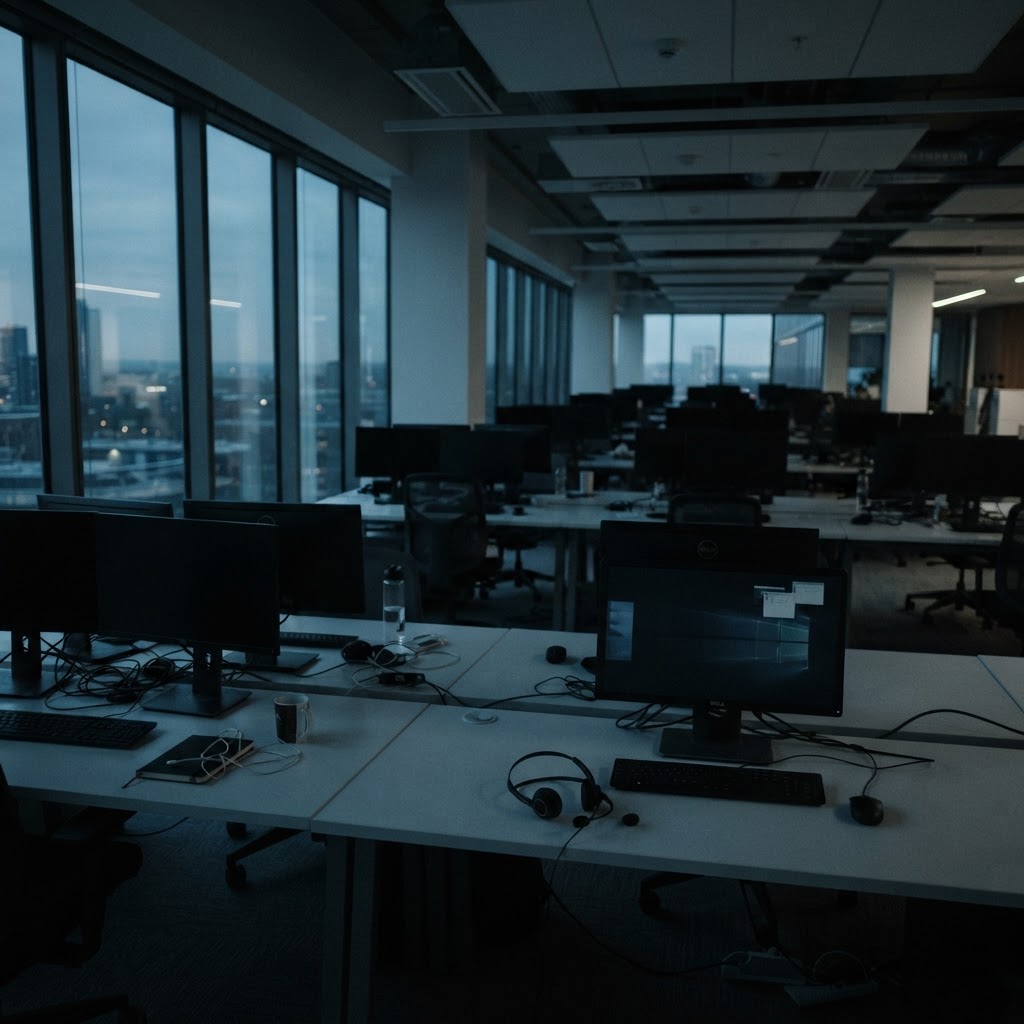
Most drivers assume there is a floor beneath them: if driving stops paying, go back to an office, a warehouse desk, a call centre, a support role. That floor is being removed at the same time. The entry-level administrative, support and coordination jobs that used to absorb displaced workers are precisely the tasks AI automates first.
That is what makes this moment different from every previous wave of automation. Drivers are not being pushed out of one job into another, they are being squeezed from both directions simultaneously, with driving income falling and the traditional safety net thinning at the same time.
"I'll just get a normal job" is no longer a plan, it is a hope competing with millions of other people having the same idea in the same year. A specific, deliberately chosen skill is a plan. Start it while you still have income.
Where a driver can realistically go next
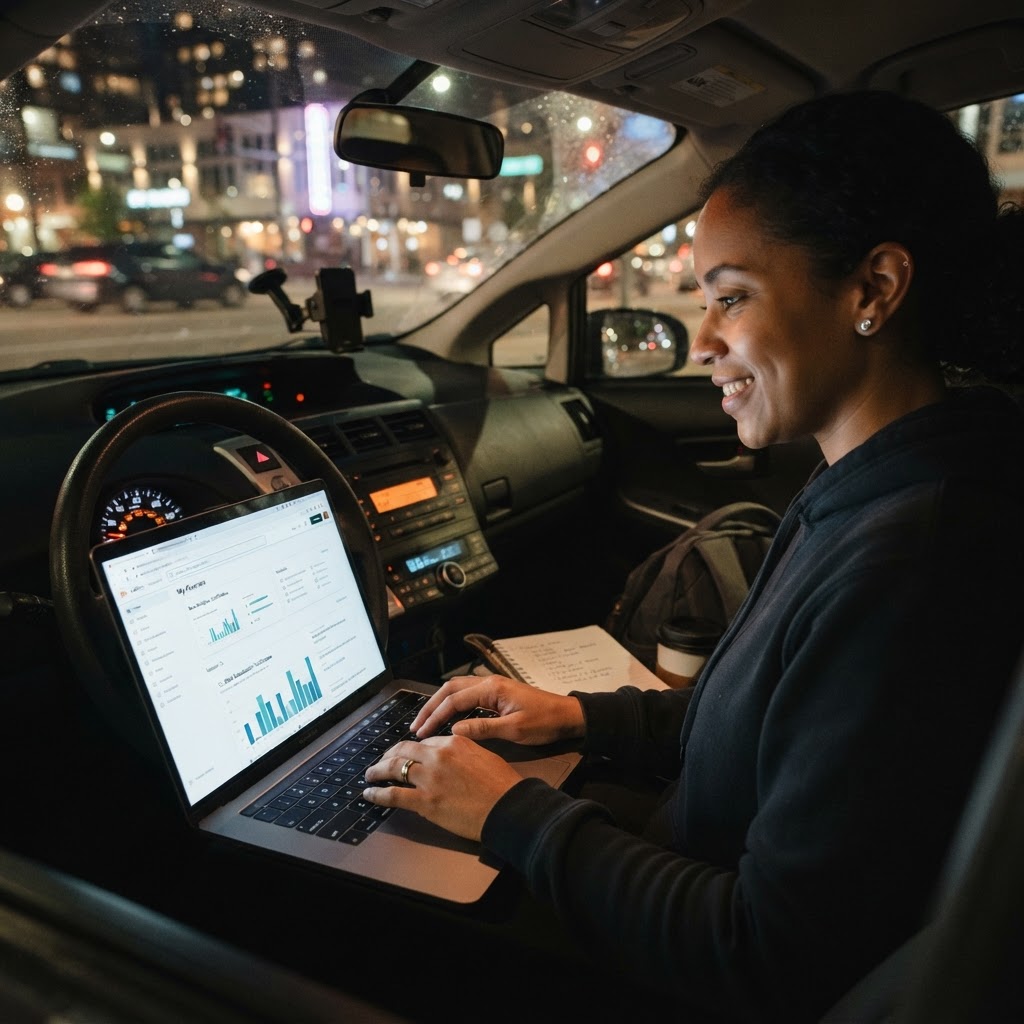
You do not need a degree, a visa change or a relocation. You need one skill that pays remotely, can be learned in the hours around your shifts, and does not depreciate when the next technology wave lands.
IT & Cloud Support
3–6 months of study
- •Entry certifications are online and affordable
- •Remote-first, shift-friendly around driving hours
- •Clear salaried ladder once you are in
Payoff: Stable paycheque, employer-funded growth
AI Training & Data Work
Weeks to start
- •Paid per task, start while still driving
- •Language skills are an asset, not a barrier
- •Feeds directly into higher-paid AI roles
Payoff: Fast first income, low entry cost
Day Trading & Markets
3–6 months of practice
- •Capital-light to learn, journal-driven discipline
- •No boss, no shifts, no platform algorithm
- •Skill compounds instead of depreciating
Payoff: Uncapped upside, full ownership of your time
Exactly what to study, and what it pays
These are the specific courses, platforms and job boards behind the first two hatches, with current costs and typical pay so you can run the numbers on your own week before you commit to anything.
IT & Cloud Support
Named courses that employers actually recognise
Google IT Support Professional Certificate
CompTIA A+ (Core 1 & 2)
AWS Certified Cloud Practitioner
Microsoft Azure Fundamentals (AZ-900)
Google Cloud Digital Leader
AI Training & Data Work
Paid per task, you can start this week
Outlier (AI trainer projects)
DataAnnotation Tech
Appen crowd projects
TELUS Digital AI Community
Clickworker micro-tasks
Prolific research studies
Mercor expert tasks
Day Trading & Markets
What the established programs charge, and what MetaJournal charges
Warrior Trading
Bear Bull Traders
Investors Underground
Bullish Bears
MetaJournalBest value
What's included
Course prices and pay ranges are publicly listed rates as of September 2026 and vary by country, project and experience. Do the math on your own hours before committing: 10 focused hours a week at $20 per hour is roughly $800 a month, on top of whatever the car still earns.
All three of these are far easier to start while driving income still covers your rent. Learning under financial pressure is the most expensive way to learn anything. Your current fares are the cheapest tuition you will ever have access to, so spend them on purpose.
A three-month path from behind the wheel to the markets

MetaJournal was built for exactly this transition: a structured skill ecosystem where a complete beginner can learn markets, practise without risk, prove competence, and then treat the result like a real business.
- 1
Week 1–2
Learn the language of markets
Tutorials and glossaries that assume zero background.
- 2
Week 3–4
Paper trade with no risk
Backtesting and simulation before a single dollar is exposed.
- 3
Month 2
Journal every decision
The trade journal turns guesses into a measurable process.
- 4
Month 2–3
Get certified
Structured quizzes and certifications prove the skill is real.
- 5
Month 3
Join the community
Master Traders, live ideas and feedback replace isolation.
- 6
Month 3+
Run it like a business
Tax Center, statements and analytics treat your income seriously.
Built for everyone
The rideshare workforce is one of the most multilingual and multicultural workforces in the country. The platform is designed to be followed regardless of first language or financial background, with plain language, visual tools, and community support instead of jargon and gatekeeping.
The worst time to learn a new way to earn is the month your old one stops working. The best time is now, while the car still pays, while there is still a runway underneath you, and while the decision is still yours to make.
Secure your income before the window closes
Join the MetaJournal program and build a second income stream while driving still pays for it. Built for beginners, in your language, at a fraction of what the established programs charge.
Secure My Income Plan
